

J.D. BERNAL
Early Life & School
John Desmond Bernal was the eldest of five children and born at Brookwatson House, in Nenagh 10/05/1901. The house is situate in a verdant pastureland and bordered by the Nenagh River as it wends its way to Lough Derg.
The Bernal family descended from Sephardic Jews via Spain who arrived in Ireland in 1840. Desmond's father Samuel built Brookwatson in 1898. Samuel married Bessie Miller, a journalist and daughter of an Irish Presbyterian Minster from Illinois and a relative to the Riggs-Millers of Tullaheady outside Nenagh. In time Bessie was to receive instruction and converted to Catholicism just before marriage, ensuring the children were brought up within the Roman Church. Ordinarily Landed Gentry offspring would have gone to St Columba's College which was modelled on the English system of education. However the Bernals were 'arriviste' and lacked the historical but essential Cromwellian background that was present in many Irish Ascendancy families. They may have had the money but they lacked the historical credentials.
In 1911 both Desmond and his young brother Kevin were sent to Hodder Place Preparatory School in England. This was part of Stonyhurst College, a Jesuit public school in Lancashire. Desmond was a very devout young boy at this time having made his first Communion in April of the previous year. There were indications that Desmond was being groomed for the priesthood as evidenced by his commitment to religion. However despite this fervent devotion, the harsh soulless regime at Jesuitical Stonyhurst and the lack of facilities to teach science to Desmond, ended up with the boys being removed after one term and brought back to the safety of the Nenagh Diocesan School. Once again in January 1914 the boys were returned to England and this time to Bedford Public School. Desmond wasn’t popular here and was subject to bullying by both staff and pupils. However he was learning Science and Mathematics and that kept him going. In his diary he wrote.....
“…I lived like a hostage in an enemy land, My companions were cheerful thieves and liars, and furtive sexual perverts. I merely thought they were English and kept my hatred of the race closer to myself….”
Observations among his colleagues mentioned that once Desmond had developed trust with his peers and within a small intimate group, he opened up. However once a stranger was introduced to the group, the dynamic was changed and he clammed up, avoided any interaction by retreating into his own private world.
------
Within the local Nenagh District, Desmond had access to a number of separate notable amateur scientists and all members of the same Landed Gentry class to which Bernal belonged. Desmond's interest in Microscopy and Microstructures was stimulated by artist & polymath Launcelot Sanderson Bayly of Bayly farm, a short bicycycle ride away at Ballynaclogh outside of Nenagh. Desmond is known to have visited there on 27/04/1917 and again on 06/01/1918 according to his diary. It was here he was introduced to the use of a polariscope in the study of diatoms.
Further to this, in the summer of 1917 Bernal visited Birr Castle which at that point had been famous as having been the site of the largest telescope in the world when first built in the 1840’s by William Parsons, the Earl of Rosse. Desmond would later visit the Parson family as a house guest in 1928.
Desmond would also visit the water turbine at Scotts Mills up the road from Brookwatson and was fascinated by how it worked as a primary source power supply. The manager here was Carlo Moynan, elder brother of Raymond who Desmond had gone to school with in Nenagh. He would also visit Hanleys Mills in Ballyartella and although impressed by the local tweed making, the prescence of a 12 year old girl worker and the seasoned hand-loom weavers with bent backs, rankled his Socialist ideals and disturbed his sensibilities. Further visits to outlying Silvermines took in the Beam Engine at Shallee Mine Works. These were dangerous times though and although he sought isolation he was mindful that he could also be taken to be a spy and a West-Brit accent would do him no favours on these visits.
In 1921 Bernal was in touch with Mr Parker of Castlelough with whom he went to study geology at the local quarries, dropping into Parkers car and exploring the district. The scars of the Copper and Slate quarries at Tountinna, Laghtea,Cloneybrien and Curragh were visible within the surrounding area and would have helped in this geological research. Later visits in 1928 had Desmond at Ardnacrusha during its construction and his brother Godfrey recalls Desmond conversing in German with the Siemans engineers who were staying in Nenagh at the time.
------
Coming home from Bedford during the school holidays the boys would have passed the smoking ruins of post-1916 Dublin. During the War of Independence Nenagh was a military base for the Crown and was also a centre for Republicanism. The Bernal family home at Brookwatson remained unscathed in the conflict. The farm supplied Nenagh with most of the towns milk requirements and so was a valuable asset.
The family car was 'borrowed' on a number of occasions but by and large the family were left alone by the Republicans. The Catholic Bernals were held in some regard so they escaped the ransacking, looting, potshots and arsons that was meted out to some of the neighbouring Church of Ireland houses within the district.
When retired County Inspector Galway Foley from Ballintogher, was shot and wounded on 3rd of September 1920 after refusing entry to his house and to give up his arms, Desmond came out in support of the Flying Column much to the consternation of his family and neighbours. Desmond was excluded from the niceties of polite society by virtue of his subversive and controversial opinions. He supported Sinn Fein and the armed struggle that sought to remove the Ascendancy. The upshot was Desmond now avoided discussions within the family circle of anything that bordered on Religion, Politics or Socialism. This avoidance was noticeable enough as to be remarked upon later by his younger brother Kevin. Desmond realised around this time that he was in fact ignorant as to the history of the Irish Struggle as his education within the British class system would have no reason to enquire into the Irish question. He continued his self radicalisation by reading Alice Stopford Greens "The Making of Ireland". His scientific approach of 'cause and effect' would impact on his political viewpoint.
------
The sinking of the RMS Leinster in October 1918 with the loss of 564 souls heightened the concerns of the Bernal family so the boys were kept in Ireland to avoid falling foul of U-boot activity. Desmond spent time at a Hotel in Dublin with two teachers from Trinity preparing him for the entry requirements for Cambridge. With the end of the Great War, Desmond returned to Bedford and bullying the following Easter. He was awarded a prize of £60 from Bedford School and a further scholarship to Emmanuel College, Cambridge.
At Cambridge, Desmond read Mathematics and Science. He decided to devote his career to Physics as
"chemistry is too full of smells, and geology too full of names."
The university was an exciting place for a fresh young student. Those straight from school mixed with mature students who had deferred whilst they fought at the front. Internationally, the Russian Revolution had occured so Socialism and all it entailed was making an impact. The doctrine was popular as the students tried to reconcile a new and more effective, fair and just society as opposed to the opressive class system of the previous pre-war world. Desmond responded by fully embracing the new politics of Socialism, something which would dog him in later life.
Desmond graduated in 1922 with a Bachelor of Arts Degree. He married his wife Eileen Sprague two days later against the wishes of the family back in Ireland. He was 21. The usual arguments were put forward...too young, too poor, lack of career prospects, devoid of direction etc but Desmond stuck to his guns....
"....I must live my life my own way..."
Unfortunately his ability to rub people up the wrong way meant Desmond was disliked by Earnest Rutherford and consequently was refused a Fellowship at Emmanuel College. Desmond did however become a Professor of Physics at Birbeck College in London. Looking back on his intellect and his time spent at Cambridge, Desmond summed it up thus...
“….an undigested mass of Einstein amd Freud with a top dressing of Wide and Shaw.”
------
In 1923, Desmond did pioneering work on the structure of Crystals under William Bragg at the Royal Institution. He found that by passing X-Rays through crystals it emitted patterns of diffraction which he captured on a photographic plate. By studying the resultant two-dimensional pattern of dots he could work out the three-dimensional form of the crystal.
Well ahead of his time, Desmond proposes a Bernal-sphere - a hollowed out asteroid which would become an interplanetary spaceship peopled by Cyborgs and Post-Humans. The very stuff of Science Fiction. One wonders how much of this was influenced by time spent with Science fiction author Lancelot Sanderson Bayly at Bayly Farm in Ballynaclogh.
In the 1930's Bernal became a member of the Tots and Quots club ("Quot homines, tot sententiae" literally 'as many men, so many opinions'). Ostensibly this was an exclusive dining club set up to share scientific information and remove political borders in the furtherance of science. However introduce the Cambridge elements of Guy Burgess, Anthony Blunt and Donald McClean and it became a clearing house for espionage. Naively Bernal and some of his colleagues saw the club as a forum among radical scientists and economists whereby they could influence and improve the condition of mankind. The more cynical were guided by more mercenary and political aspirations.
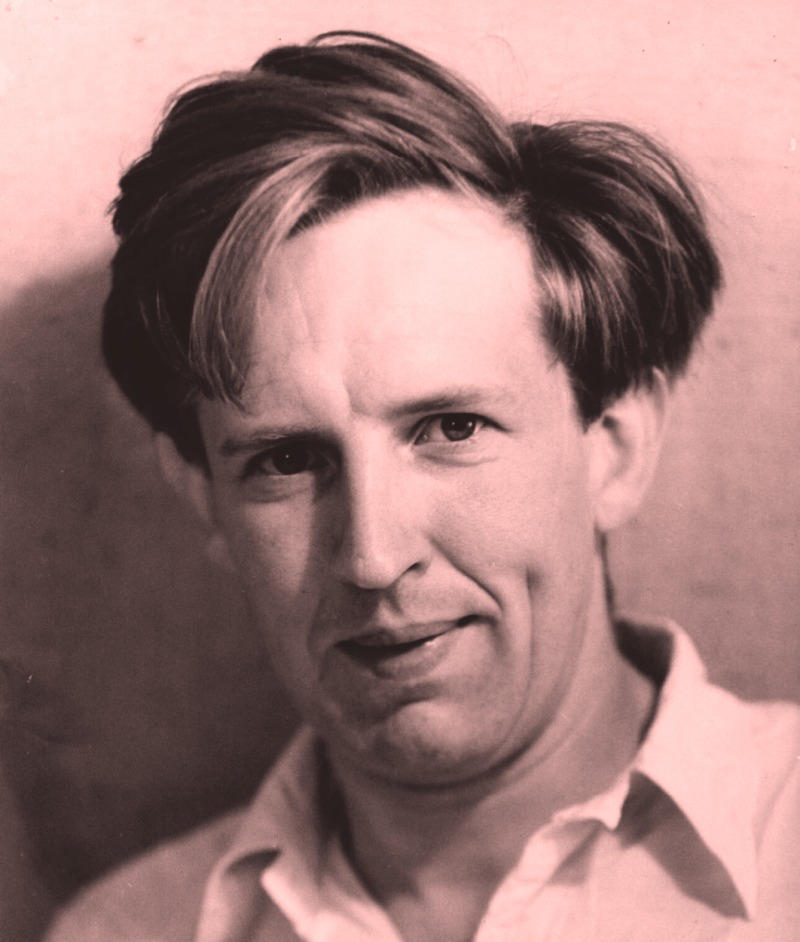
Professor J.D. Bernal

BROOKWATSON HOUSE

In the drawing room at Brookwatson 1906

Ardnacrusha Power Station which was visited in 1928 by Desmond Bernal. An abiding interest in primary source energy generation was to remain with him throughout his life (Brigid O'Brien)
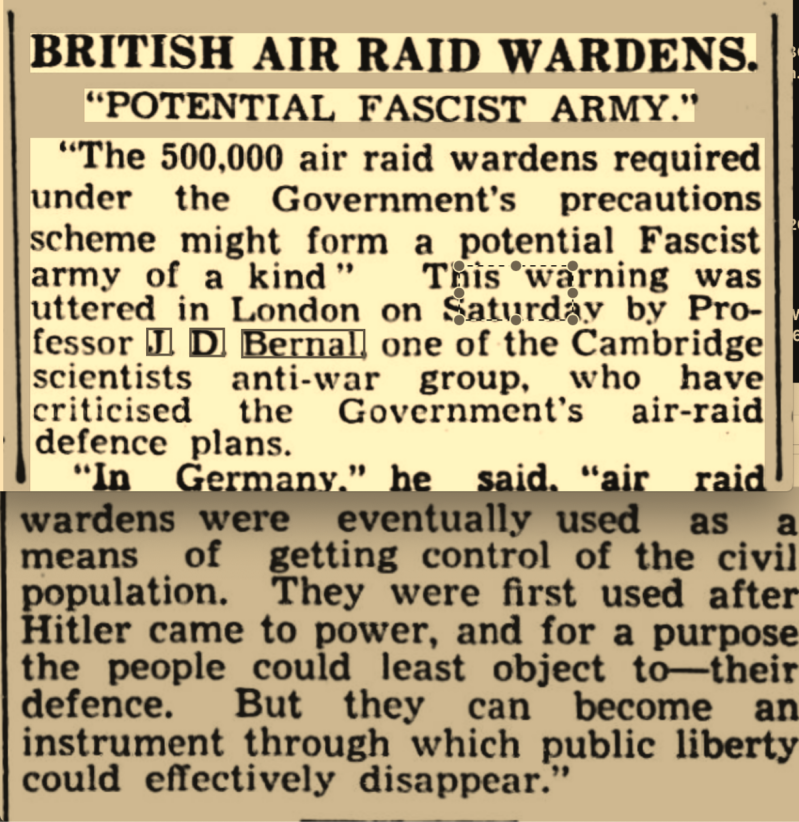
Bernal a constant thorn in the Governments side
WEEKLY TELEGRAPH 01/05/1937

Felix Topolski portrait of Bernal
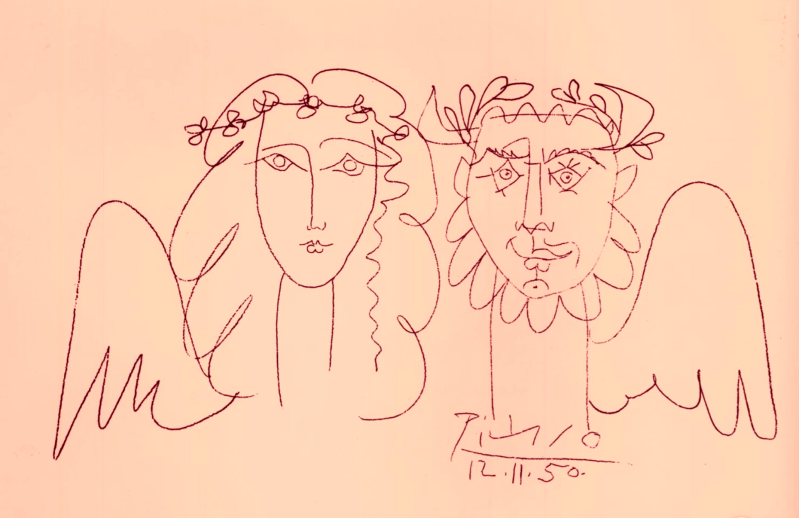
During a 1950 Peace Conference held in London, Picasso attended. He was invited to dinner at Bernal's flat at Torrington Square and drew this mural on the wall as gratitude. The entire wall has since been removed and is preserved at Birkbeck College.

One of Bernal's illustrations from The Physics of Air Raids delivered at an afternoon lecture at the Royal Institute on 03/12/1840 and later published by The Engineer in April 1941
The War Years
Unconventional to the last, Desmond was not only pro-Marxist and pro-Soviet, which meant he was excluded from many of the higher level war planning conferences as he was looked upon with suspicion. One could say he was of the worst kind the British Establishment could be faced with....an intelligent outspoken Irish Republican Socialist and Bohemian Radical. His involvement with Marxist and Communist groups went beyond student flirtation. Of course some would say its very easy to be a Socialist when despite being the proverbial black sheep, he was propped up by an allowance from the farm at Brookwatson. In an interview with John Halperin, C.P. Snow confirmed
"....all my communist or near communist friends were gentlemanly in origin..."
In his novel, The Search, Snow based the character of Constantine on Bernal. Snow was in awe of Bernals effortless intellect and brilliance. While others had to endure the hard slog, Desmond would arrive at a conclusion without effort leaving him open to petty jealousies. This caused Desmonds peers to refer to Bernal as 'Sage'. Max Ferdinand Perutz an Austrian Molecular Biologist and Nobel Prize winner in Chemistry stated...
.....we really did call him Sage, because he knew everything, and I became his disciple?
A further endorsement from C.P. Snow .....
…he was someone whom you certainly couldn't know without being affected
Desmond's socialist and Republican viewpoint would prejudice any dealings with him in later life and although in time he became disillusioned with the Soviet regime, he remained at heart a committed socialist. The question mark over Desmond 'Red' affiliations sunk any ambitions he might have had to be a Fellow at Cambridge.
Desmond's unconventionality saw him maintaining three separate polyamorist households with partners and children. Whilst he remained married to Agnes Eileen Sprague, he had a son with mistress and artist Margaret Gardiner and a daughter with mistress and writer Margot Heinemann. All were known to each other and amicably interacted together. Within this Bohemian menage and lifestyle, it is recorded that Picasso created his only known British mural on the walls of Bernal’s flat. This was later removed and is now kept at Birkbeck College.
------
When Churchill succeeded Neville Chamberlain as Prime Minister he convened the War Cabinet and decreed that all scientists regardless of political persuasion were to be absorbed within the Government in order to provide a solid basis for winning the war and ridding the world of Fascism. The only exception was none were to be absorbed into Intelligence. Past misdemeanours were to be overlooked so known Homosexuals, Communists Marxists and Socialist Agitators were to be employed and allowed to function within the various departments. Military might alone would not win this war, this was an opportunity for scientists to shine. This would feed into Bernal's own question regarding the role of the scientist in modern society. Unfortunately in the War and Post War era it became the responsibility of the scientist to be aware of the danger of disclosure of his research in a world that had previously shared scientific breakthroughs. Sharing for the common mans benefit was no longer an option with martial and economic concerns now being the driving force.
------
Desmond met with the Lord Privy Seal Sir John Anderson (he of the Anderson Shelter) in the summer of 1939 and lectured the future Home Secretary on Passive Bombing and on the protection of the population from falling bombs. Suitably impressed, Anderson demanded Bernal be employed by the government. When informed by an adviser that Bernal was a 'Red' Anderson retorted
"...if he's as Red as the fires of Hell, I still want him..."
Desmond was appointed to the Civil Defence Research Committee and assigned the task of studying the Physics of Blast and Penetration. He delivered a lecture on the afternoon of 03/12/1940 at the Royal Institute on the topic of The Physics of Air Raids. This was later published by The Engineer periodical in April 1941.
In later years Desmond would switch his interest to offensive bombing for maximum effect such as the targeting of locomotives for maximum disruption which in turn would cause materiel to be moved by road thus consuming valuable resources of petrol and diesel and personnel. What seems an obvious strategy nowadays has to have a point of inception in the first instance.
In 1939, Desmond joined the Ministry for Home Security. In 1942 Desmond became a scientific adviser to Lord Louis Mountbatten, becoming a member of the “Department of Wild Talents”. He held the rank of Lieutenant within the RNVR (Special Branch). Earl Mountbatten later paid a tribute to Desmond and his contribution to the War effort in the following words.....
"....He had a very clear analytical brain; he was tireless and outspoken. Perhaps his most pleasant quality was his generosity. He never minded slaving away at other people’s ideas, helping to decide what could or could not be done, without himself being the originator of many of the major ideas on which he actually worked. This may be the reason why his great contribution to the war effort has not been properly appreciated, but those of us who really knew what he did, have an unbounded admiration for his contributions to our winning the war."
On the 6th of March of 1942 Desmond was approached by Eric Blair aka George Orwell at the Forest Products Research Station at Princes Risborough, in Buckinghamshire. He requested Bernal might present a series of six half-hour talks on the History and role of Science and the Modern World from Medieval Times to the present day. This was to be followed by a discussion on the position of the scientist under the different regimes of Capitalism, Fascism and Socialism. Bernal agreed to deliver two of the lectures, timed between 15 - 20 minutes and to nominate others for the remaining four.
However, Orwells opposite number at the BBC Home Service was Guy Burgess and he wrote to Bernal on 13/04/1942 in an attempt to poach Bernal for his own programs. Burgess knew of Bernal from his Cambridge days and held a very large carrot of a program on "The organisation of Science in the Soviet Union" . In his letter to Bernal, Burgess addresses him with the endearment and soubriquet "Sage". Surely this points to Burgess as master manipulator. Whatever the reason, Bernal bowed out of Orwells request. It was widely known that Orwell had a hatred of not only Fascism but also for Socialism and Communism and was well aware of Bernals political leanings. Whether this was a contributing factor or Guy Burgess's input influenced him is unsure. No doubt Bernal was probably distracted by other more pressing projects.
-----
Following the disastrous Dieppe Raid in 1942, valuable lessons had been learned. The Canadians had suffered huge losses. Out of 4963 Canadians in the invasion force, there were 3,367 casualties, including 1,946 prisoners of war and 916 Canadian fatalaties. Desmond was determined that the same mistakes would not occur again for Operation Overlord. The Quebec conference had been convened in Canada in order to iron out strategies and timelines for the invasion of Europe and the ending of the War. Desmond was the only British representative scientist in attendance. No doubt his Irishness being overlooked.
-----
When the Allies were planning the top-secret invasion of Nazis occupied France, a number of issues arose in the planning; not least of which was the need for a harbour. The Germans held the only deep water harbours at Caen and Cherbourg and these were heavily defended.
The problem was that large ocean-going ships of the type needed to transport heavy and bulky cargoes and stores needed a sufficient depth of water under their keels, together with dockside cranes, to off-load their cargo.
Desmond demonstrated the advantages of creating and transporting an artificial harbour to aid the invasion. Establishing a bridgehead could be achieved but any planned invasion would grind to an inevitable halt without proper and continous supply lines. Without a functioning harbour the Allies would not be able to support and supply the men landing on the D-Day beach-head.
The Mulberry harbours enabled the supply of troops and materiel to advance the Normandy Invasion. The genius idea was the individual caissons were constructed of concrete and steel along the English coast and floated across the Channel before being sunk at Omaha and Arromanche beachheads. Desmond had already scouted Arromanche and had provided detailed maps of tides from his own visits and aerial surveys.
On D-Day+1, Bernal was himself on the beaches checking on the effectiveness of the landings and the re-supplying of the troops. None other than Albert Speer, the reknowned Nazi architect, was suitably impressed with the rapidity of Mulberry's construction.
“To construct our defences we had in two years used some 13 million cubic metres of concrete and 1½ million tons of steel. A fortnight after the Normandy Landings, this costly effort was brought to nothing because of an idea of simple genius. As we now know, the invasion force brought their own harbours, and built, at Arromanches and Omaha, on unprotected coast, the necessary landing ramps.”
------
In Dorothy Hodgkins memoirs of Bernal for the Royal Society she taliks of puchasing bread from a shop in Cambridge, fruit and cheese from the market and firing up the bunsen on the bench to brew coffee. Everything and all topics were up for discussion.
“…..one day there was talk about anerobic life at the bottom of a lake in Russia, the origin of life, another about Romanesque architecture in French Villages or Leonardo DaVinci’s engines of war, about poetry or painting. We never knew to what enchanted land we would next be taken,,,”
In 1964 somebody asked Hodgkin after being awarded the Nobel Prize in Chemistry, what she would do if someone handed her a piece of moonrock. Her immediate reply was
…”give it to Bernal!!”
To Desmond, it wasn't the individual plaudits that mattered, it was the thrill of the chase. The solving of a conundrum and moving on. He was a flamboyant genius, chaotic in his working practices, his desk was a riot of papers, constantly flitting from one topic to the next leaving projects unfinished as he was seduced by the latest but equally loved by those who had the good fortune to have him as a Supervisor. To the conservative Lord Rutherford though, who tried to have him dismissed from Cavendish Laboratories, Desmond and his bohemian lifestyle was a constant pain. Chrystallographer John Kendrew stated of Bernal in the Dictionary of National Biography ...
"He had an infectious delight in new ideas, whether his own or another’s, the question of credit did not arise, for all that mattered was that the idea was exciting and that it had to be pursued. Other people’s results gave him as much pleasure as his own. He had an immensely stimulating influence on scientists of his own and younger generations, which was far beyond, and possibly more important than, his own personal contributions?
------
A constant thorn in the Establishment’s side, Desmond could claim Picasso, Barbara Hepworth, Chairman Mao and Nikita Krushev among his friends and acquaintances. Desmond died September 1971 aged 71. He was commemorated in March 2001 with the prestigious Blue Plaque at his residence at 44 Albert St, Camden. Although awarded the Stalin Peace Prize, he was never offered the Nobel prize. He is another of Nenagh's sons devoid of any form of recognition or memorial. An annual JD Bernal Lecture is held every year at Birkbeck College in his honour.
We close with a statement in Bernal's own words......
"Already enough is known to show that the whole concept of the superiority of Western Christian civilisation is one based on an arrogant ignorance of the rest of the world"

Letter from Eric Blair to JD Bernal 06/03/1942
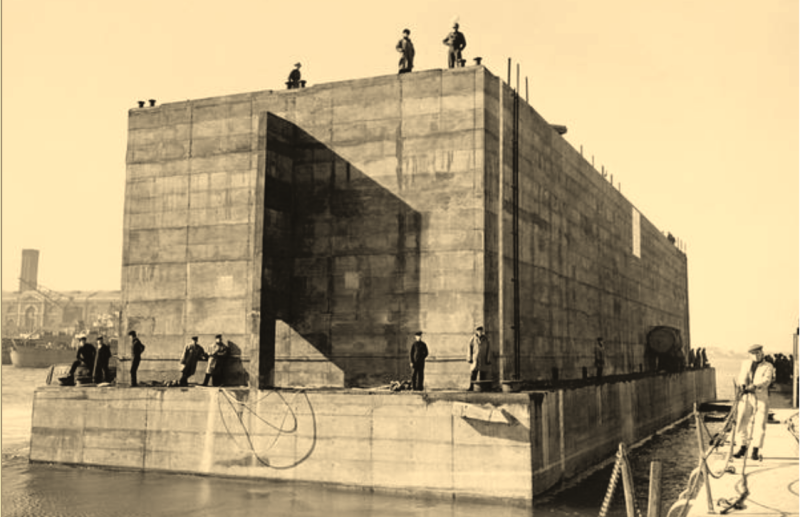
Phoenix caissons were to act as breakwaters
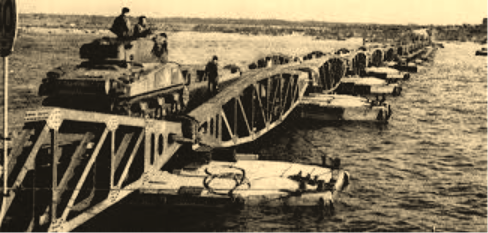
Pierheads would deliver supplies and reinforcements down pontoon bridges
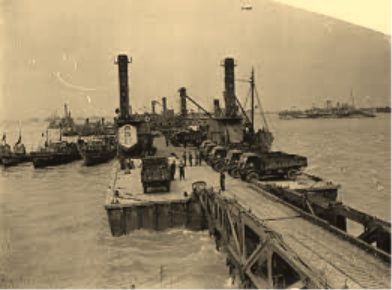
The pierheads were on 'spuds' which rose and sank with the tide enabling a stable surface. These were in turn anchored to the seabed for stability.
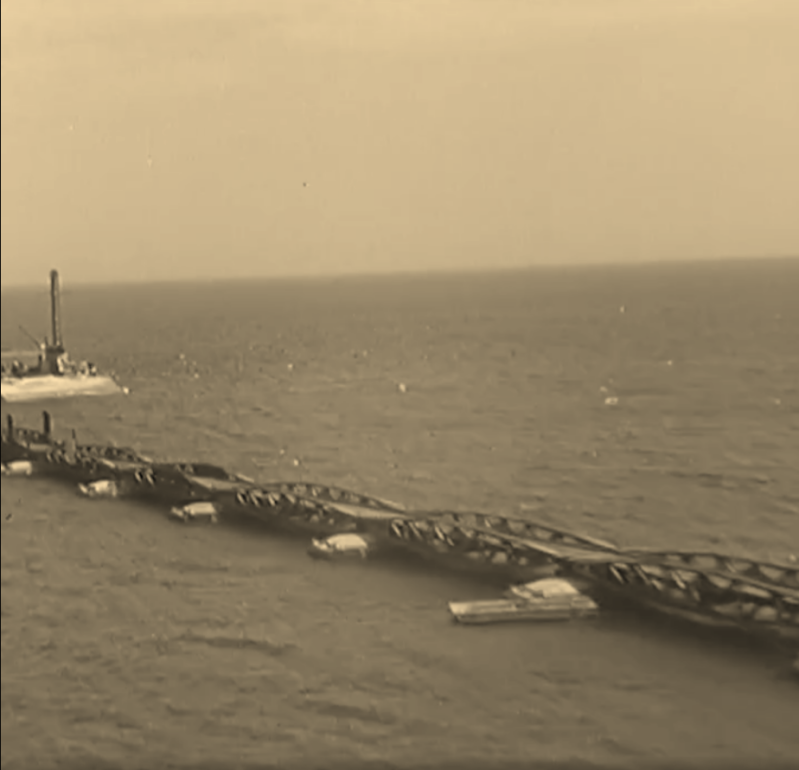
Pontoon Bridges
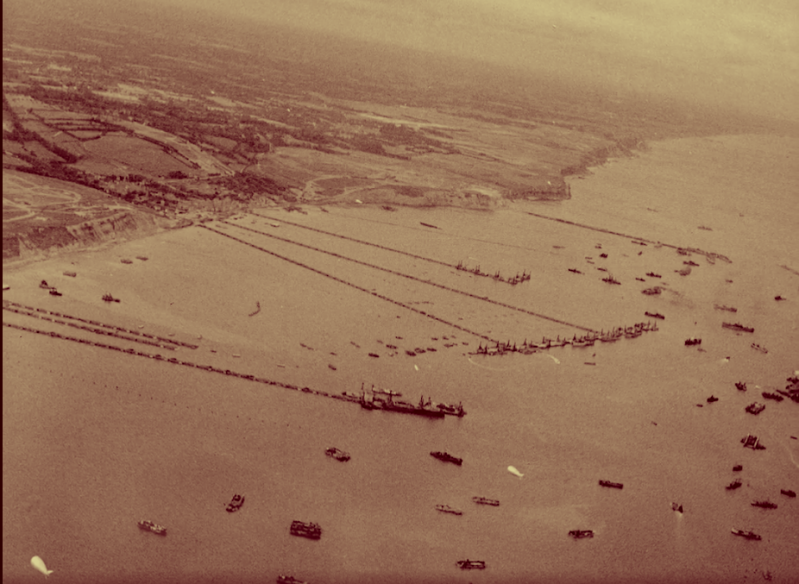
Aerial view of the Pierhead at work
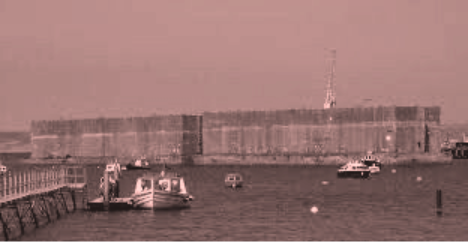
Caissons still in place today
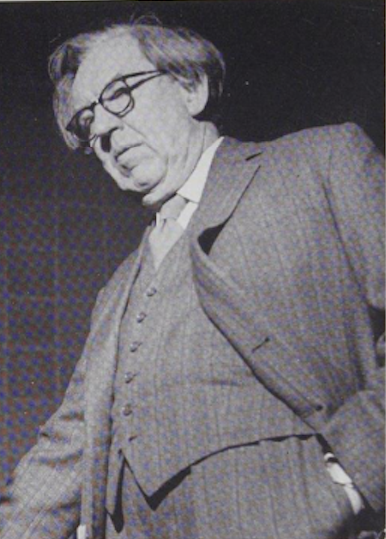


With Nikita Khrushchev at the World Peace Conference. Bernal is holding a comms unit to his ear connected to a translator

Bernal's Blue Plaque in Camden but sadly none in his home town of Nenagh


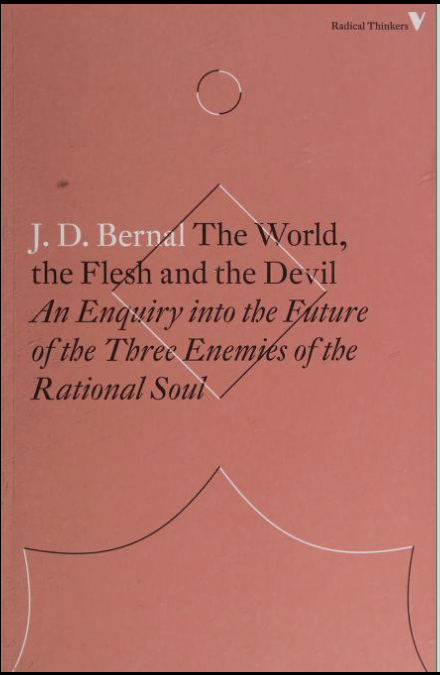
A selection of JD Bernals literary output.
Create Your Own Website With Webador